Solar energy has become one of the fastest-growing energy solutions in the United States. Rising electricity prices and government incentives have encouraged millions of homeowners to install solar panels.
However, before switching to solar energy, many homeowners want to know one important thing: how much will solar panels cost for their home?
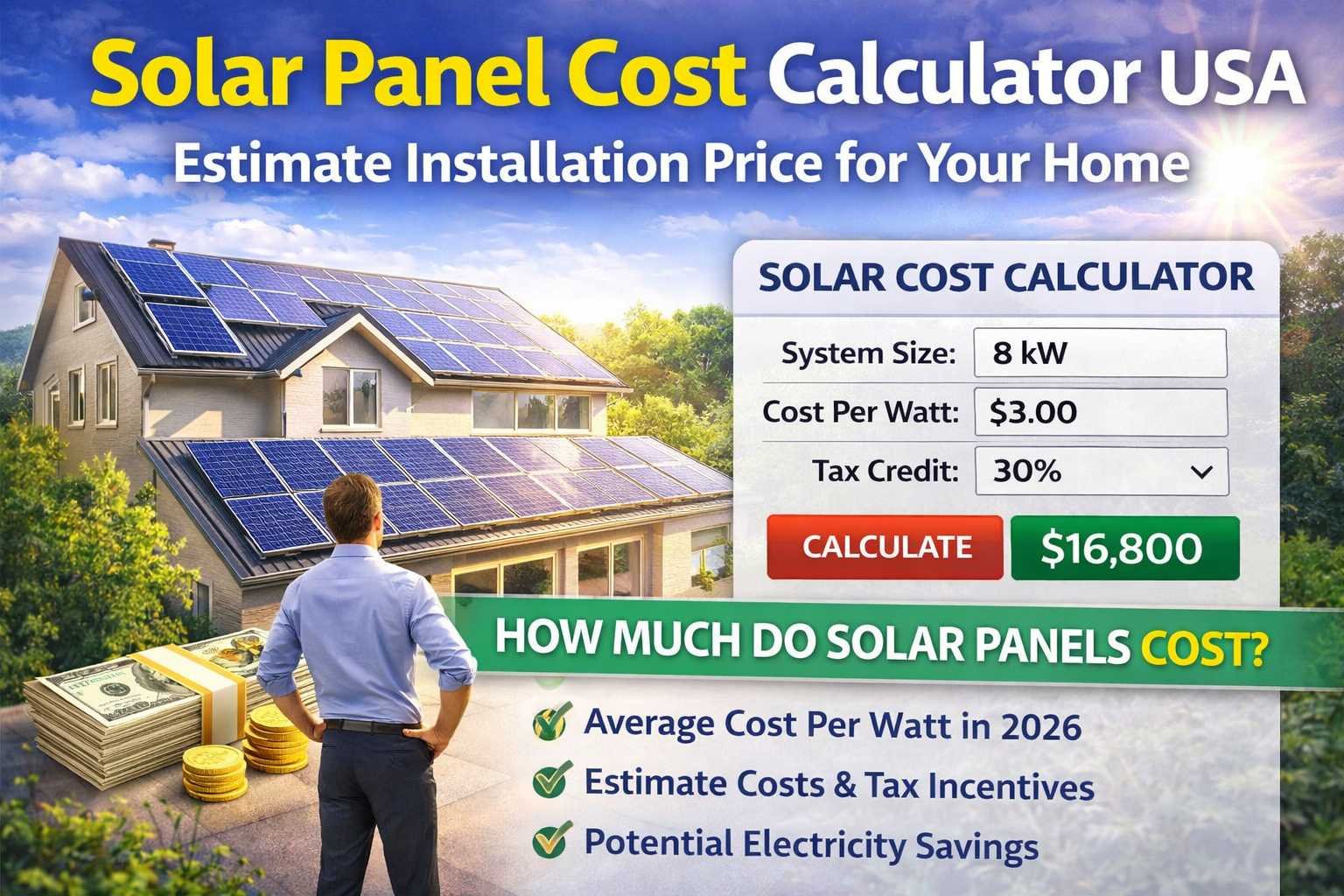
A solar panel cost calculator helps estimate the total cost of installing a solar energy system based on factors such as location, system size, and electricity usage.
This guide explains how solar cost calculators work, the average solar installation price in the United States, and how homeowners can estimate their potential savings.
Average Solar Panel Cost in the USA
The cost of solar panels in the United States is usually calculated based on cost per watt.
In 2026, the average residential solar installation cost is approximately $2.50 to $3.50 per watt before incentives.
Typical system costs include:
| System Size | Average Cost |
|---|---|
| 4 kW | $10,000 – $14,000 |
| 6 kW | $15,000 – $21,000 |
| 8 kW | $20,000 – $28,000 |
| 10 kW | $25,000 – $35,000 |
Most American homes install systems between 6 kW and 10 kW depending on electricity usage.
Solar Panel Cost Calculator (Basic Formula)
A simple way to estimate solar installation cost is using the following formula.
System Size (kW) × Cost Per Watt = Total Installation Cost
Example:
If a homeowner installs a 7 kW solar system and the cost per watt is $3, the estimated installation cost would be:
7,000 watts × $3 = $21,000
Actual costs may vary depending on equipment quality, installer pricing, and location.
Factors That Affect Solar Installation Cost
Several factors influence how much homeowners pay for solar systems.
System Size
The size of the solar system is the biggest factor affecting installation cost.
Homes with higher electricity usage require larger solar systems.
Equipment Quality
Solar panel brands and inverter types can affect the overall cost.
High-efficiency panels usually cost more but produce more electricity.
Roof Type and Condition
Roof structure can influence installation complexity.
Flat roofs are usually easier for installers compared to steep or complex roofs.
Installation Company
Different solar installers charge different prices for equipment and labor.
Comparing multiple quotes helps homeowners find the best price.
Federal Solar Tax Credit
One of the biggest financial incentives for homeowners installing solar panels is the Federal Solar Investment Tax Credit (ITC).
This program allows homeowners to deduct a percentage of solar installation costs from their federal taxes.
For example:
If a solar system costs $25,000, the tax credit can reduce the effective cost significantly.
Additional incentives may also be available depending on the state and local utility programs.
Solar Panel Savings Calculator
Solar panels reduce electricity bills by generating power from sunlight.
Typical electricity savings depend on several factors:
- Local electricity rates
- Solar system size
- Sunlight exposure
- Energy usage
Example savings estimate:
| System Size | Monthly Savings | 25-Year Savings |
|---|---|---|
| 6 kW | $80 – $120 | $24,000 – $36,000 |
| 8 kW | $110 – $160 | $33,000 – $48,000 |
| 10 kW | $140 – $200 | $42,000 – $60,000 |
Actual savings vary depending on electricity prices and local incentives.
Solar Payback Period
The solar payback period is the amount of time required for energy savings to cover the installation cost.
Most homeowners in the United States recover their investment within 6 to 10 years.
After the payback period, solar panels continue generating electricity for 20 to 30 years, resulting in significant long-term savings.
Solar Financing Options
Many homeowners install solar panels using financing instead of paying the full cost upfront.
Common financing options include:
Solar Loans
Homeowners borrow money to install solar panels and repay the loan through monthly payments.
Solar Lease
A solar company installs and owns the system while the homeowner pays a monthly fee.
Power Purchase Agreement (PPA)
Homeowners pay only for the electricity generated by the solar panels.
Each financing option offers different advantages depending on the homeowner’s financial situation.
Is Solar Worth It in the USA?
For many homeowners, solar energy provides long-term financial benefits.
Advantages include:
- Lower electricity bills
- Protection from rising energy prices
- Federal tax incentives
- Increased home value
- Reduced carbon emissions
Homes located in sunny states with high electricity prices usually see the highest financial returns.
Final Thoughts
A solar panel cost calculator helps homeowners estimate how much it will cost to install solar panels and how much they can save over time.
Although the upfront cost of solar installation can be significant, government incentives and long-term electricity savings often make solar one of the most profitable investments for homeowners.
By understanding system size, installation costs, and available incentives, homeowners can make informed decisions about switching to solar energy.