Commercial solar energy has become one of the most profitable long-term investments for businesses in the United States. Rising electricity prices and government incentives have encouraged many companies to install solar systems on warehouses, factories, office buildings, and retail properties.
However, one of the first questions business owners ask is: how much does commercial solar installation cost?
The cost of installing solar panels for businesses depends on several factors, including system size, equipment quality, installation complexity, and available incentives.
This guide explains the average commercial solar installation cost, factors affecting pricing, and how businesses can reduce installation expenses.
Average Commercial Solar Installation Cost in the USA
Commercial solar systems are usually priced based on cost per watt of installed capacity.
In 2026, the average commercial solar installation cost is approximately $1.40 to $1.80 per watt, depending on system size and project complexity.
Some installations can cost between $1.83 and $3.50 per watt before incentives, depending on location and equipment.
Because commercial systems are much larger than residential systems, the total project cost can vary widely.
Typical system prices include:
| System Size | Estimated Cost |
|---|---|
| 25 kW | $43,000 – $56,000 |
| 50 kW | $87,000 – $113,000 |
| 100 kW | $175,000 – $225,000 |
| 250 kW | $437,000 – $563,000 |
These estimates can vary depending on location, roof structure, and installation complexity.
Large industrial projects can sometimes exceed $500,000 or more, especially for multi-building facilities or large warehouses.
Cost Per Watt for Commercial Solar Systems
Solar installation pricing is usually measured in dollars per watt ($/W).
Typical commercial solar pricing includes:
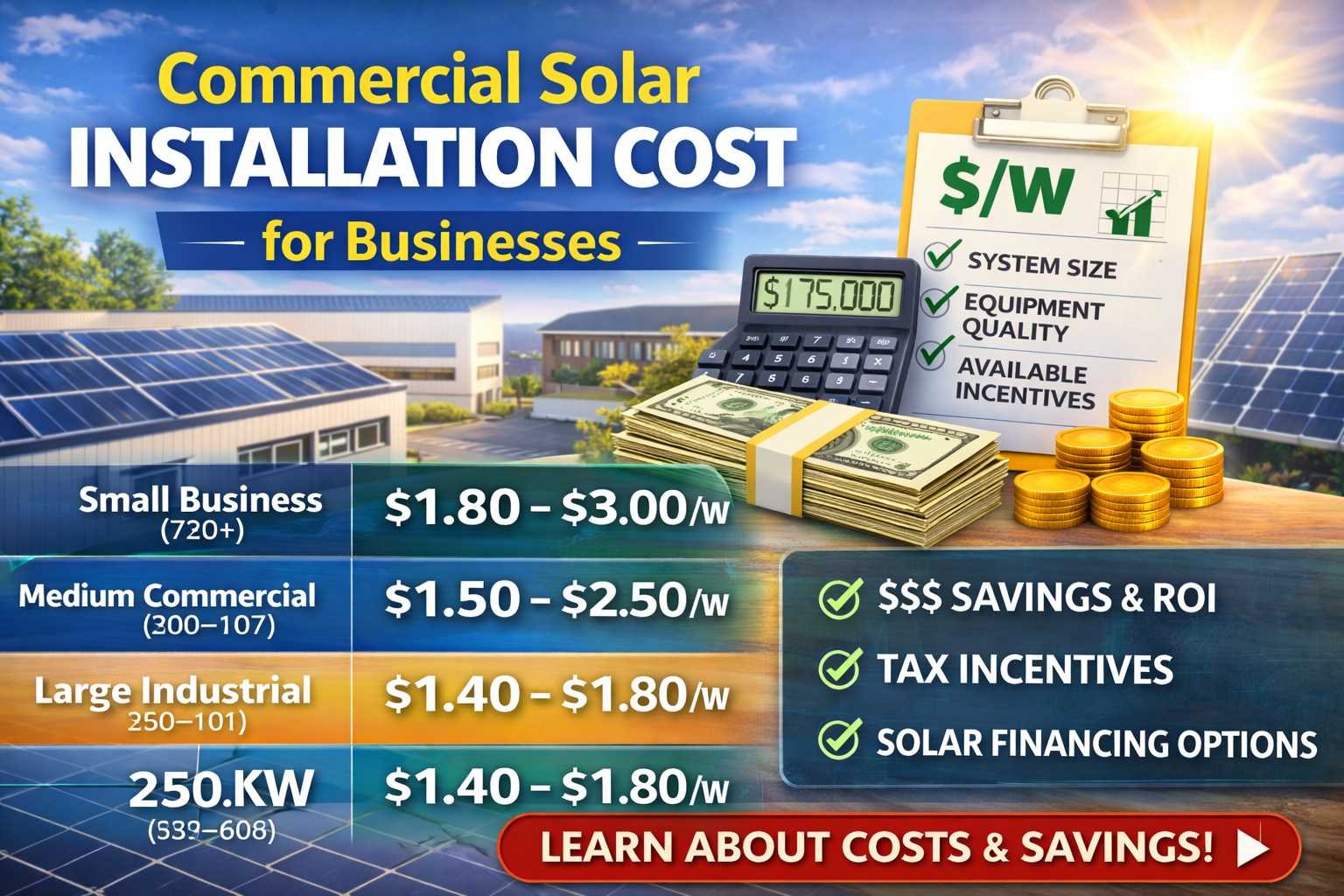
| Installation Type | Cost Per Watt |
|---|---|
| Small Commercial Systems | $1.80 – $3.00 |
| Medium Business Systems | $1.50 – $2.50 |
| Large Industrial Systems | $1.40 – $1.80 |
Larger systems typically cost less per watt because of economies of scale.
Factors That Affect Commercial Solar Installation Cost
Several factors influence the total cost of installing solar panels for businesses.
System Size
The larger the system, the lower the cost per watt.
Large warehouses and manufacturing plants often install systems exceeding 500 kW or even 1 MW.
Equipment Quality
High-efficiency solar panels usually cost more but produce more electricity.
Panel costs alone typically range between $0.60 and $1.20 per watt, depending on panel type and efficiency.
Installation Complexity
Commercial installations can vary significantly depending on building design.
For example:
- Flat roof installations are easier and cheaper
- Ground-mounted systems require additional land and structures
- Older buildings may need electrical upgrades
Labor and Permits
Permitting, engineering, and labor costs often represent a large portion of commercial solar installation expenses.
These “soft costs” can include:
- Engineering design
- Building permits
- Electrical upgrades
- Grid connection
Government Incentives for Commercial Solar
Many businesses reduce installation costs through federal incentives.
The most significant incentive is the Federal Solar Investment Tax Credit (ITC), which allows businesses to deduct a percentage of the solar installation cost from their federal taxes.
Businesses may also qualify for:
- Accelerated depreciation (MACRS)
- State solar incentives
- Utility rebates
These incentives can reduce total project costs by 30% or more in some cases.
Commercial Solar ROI for Businesses
Commercial solar systems often deliver strong financial returns for businesses.
Key financial benefits include:
- Lower electricity bills
- Protection from rising energy prices
- Tax incentives and rebates
- Increased property value
Many businesses recover their solar investment within 5–8 years, depending on electricity prices and system size.
After the payback period, the solar system continues generating free electricity for 20–30 years.
Solar Financing Options for Businesses
Businesses can install solar systems through several financing options.
Cash Purchase
Paying upfront provides the highest long-term savings.
Solar Loans
Commercial solar loans allow businesses to spread installation costs over several years.
Power Purchase Agreements (PPA)
A PPA allows businesses to install solar with little or no upfront cost and pay only for the electricity produced.
Is Commercial Solar Worth It?
For many companies, solar energy provides one of the best long-term investments available.
Benefits include:
- Reduced operating expenses
- Long-term energy price stability
- Environmental sustainability
- Improved brand reputation
Businesses with large electricity consumption, such as warehouses, factories, and retail centers, usually benefit the most from commercial solar installations.
Final Thoughts
Commercial solar installation costs vary depending on system size, equipment quality, and installation complexity. In the United States, most businesses can expect to pay between $1.40 and $3.50 per watt for a commercial solar system before incentives.
Although the initial investment may seem high, government incentives and long-term electricity savings often make commercial solar one of the most profitable energy investments for businesses.
With proper planning and financing, companies can significantly reduce energy costs while transitioning to clean renewable energy.